
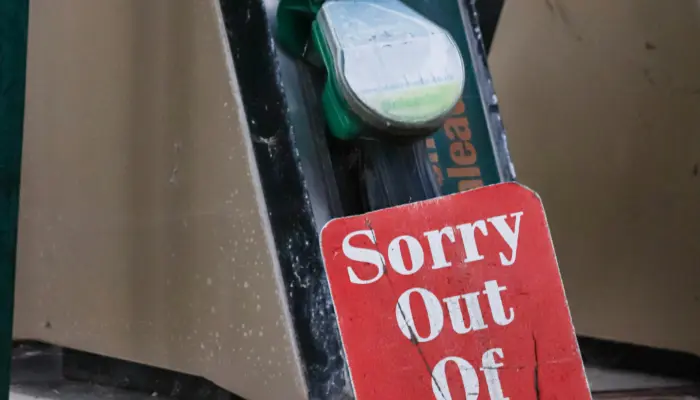
Petrol prices were already a sore point across Southeast Asia. Now, with the Strait of Hormuz effectively shut to commercial shipping following the outbreak of the US–Israel war on Iran in late February 2026, the region is staring down its biggest energy shock in years — and the pain at the pump is very real.
A Bangkok Post infographic from March 26, 2026 laid out the stark picture. Singapore leads ASEAN in gasohol prices at 87.25 baht per litre — up 23.5% — while its diesel has crossed the 100 baht mark at 100.26 baht per litre, a 53.7% spike. Brunei, cushioned by its domestic oil production, sits at the other end with gasohol at just 13.54 baht and diesel at 7.92 baht. Between those two extremes lies the full spectrum of ASEAN’s energy vulnerability.
The Strait of Hormuz: ASEAN’s Achilles Heel
The closure of the Strait of Hormuz — the narrow chokepoint through which roughly a fifth of global oil and LNG trade normally flows — hit ASEAN hard and fast. The region sources over a third of its oil and gas from the Middle East, and for some countries, that dependency is near-total.
According to economist Alloysius Joko Purwanto of the Economic Research Institute for ASEAN and East Asia (ERIA), the Philippines, Thailand, Malaysia, and Brunei are among the most exposed — with crude import dependency on the Middle East ranging from 60 to 95 percent. The Philippines is at the extreme end, relying on the Gulf for 95–98% of its crude. Vietnam isn’t far behind at 88%, followed by Malaysia at 69%, Thailand at 59%, and Singapore at 52%.
The macro numbers are equally sobering. UN estimates put oil prices up around 45% and gas up 55% since late February, with Brent crude briefly crossing the $100 per barrel mark. From March 3 to March 20, Brent went from $81.40 to $106.41 — a near 31% surge in under three weeks.
ASEAN Fuel Prices at a Glance (March 26, 2026)
Here’s how prices stack up across the bloc, with year-on-year change in brackets. Note that some countries still heavily subsidise fuel — which is both a relief for consumers now and a ticking fiscal time bomb.
| Country | Gasohol (baht/litre) | YoY Change | Diesel (baht/litre) | YoY Change |
|---|---|---|---|---|
| Singapore | 87.25 | +23.5% | 100.26 | +53.7% |
| Laos | 62.35 | +65.5% | 64.14 | +125.5% |
| Myanmar | 59.87 | +68.9% | 68.26 | +85.8% |
| Cambodia | 55.72 | +60.1% | 57.76 | +96.5% |
| Philippines | 54.50 | +81.4% | 66.71 | +109.8% |
| Thailand | 41.05 | +34.4% | 38.94 | +30.1% |
| Vietnam | 37.08 | +62.0% | 47.16 | +113.1% |
| Malaysia | 31.96 | +57.6% | 45.59 | +91.0% |
| Indonesia | 24.00 | +3.6% | 28.32 | +12.3% |
| Brunei | 13.54 | +4.1% | 7.92 | +4.1% |
Why the Numbers Look So Different: The Subsidy Factor
Before drawing too many conclusions from the price table, it’s worth understanding what’s actually being measured. Not all of those figures reflect free-market fuel prices — several ASEAN governments intervene heavily to keep pump prices below what global markets would otherwise dictate. Brunei and Indonesia are the clearest examples: their low prices aren’t a sign of insulation from the global shock, but of state spending absorbing it. Indonesia’s subsidy swallows 30–40% of the true cost of petrol and diesel for consumers, while Brunei’s oil revenues fund near-blanket price suppression. Malaysia’s RON95 petrol is capped at 1.99 ringgit per litre — a price that would be fiscally comfortable at $65 per barrel crude, but is now costing the government an estimated RM3.2 billion per month, more than four times the pre-crisis subsidy bill. Thailand has deployed its Oil Fuel Fund to cap diesel prices, while Vietnam slashed fuel tariffs to zero the moment the crisis hit. At the other end of the spectrum, Singapore — which has no domestic oil production and no meaningful fuel subsidy — reflects something much closer to true market pricing, which is why its numbers lead the table by a wide margin. The practical implication is this: the countries showing the lowest price increases aren’t necessarily the most resilient. In many cases, they’re the ones spending the most to hide the pain — and that bill will eventually come due.
The Winners, the Wounded, and the Subsidised
Brunei and Indonesia: Natural Buffers
Brunei barely flinches. With domestic oil production and generous state subsidies, pump prices are essentially insulated from global markets — gasohol has risen just 4.1% and diesel matches that. It’s a world away from what’s happening elsewhere in the bloc.
Indonesia occupies an awkward middle ground. Southeast Asia’s largest oil producer by volume, it still imports over a third of its crude from abroad. Its generous subsidy — which absorbs 30 to 40% of the petrol and diesel price for consumers — explains the remarkably low year-on-year changes of 3.6% for gasohol and 12.3% for diesel. But Jakarta set aside 381.3 trillion rupiah ($22.5 billion) for fuel subsidies in the 2026 national budget based on an assumed crude price of around $70 per barrel. With Brent now hovering near $98–100, the government has bluntly acknowledged that if the state budget can’t hold, consumers will “share part of the burden.”
The Philippines: Hardest Hit
The Philippines is in the most precarious position in the region. With 95–98% of its crude sourced from the Middle East and limited strategic reserves, every barrel lost through the Strait hits Philippine consumers directly. Gasohol has surged 81.4%, and diesel — the lifeblood of the country’s public transport — is up 109.8%, having crossed ₱100 per litre domestically by mid-March. Transport groups representing jeepney drivers report that around 80% of take-home pay is now consumed by fuel costs.
The government is scrambling. The Department of Energy estimates oil reserves can last until end of April. Finance Secretary Frederick Go is eyeing an emergency purchase of 2 million barrels to extend that buffer beyond 100 days, though with most oil-exporting nations prioritising their own supply chains, that’s easier said than done. Transport workers’ groups have called for an immediate suspension of excise tax and VAT on fuel products.
Vietnam: Fast Moves, Deep Exposure
Vietnam’s diesel is up 113.1% — one of the sharpest increases in the region, and a number that reflects just how exposed the country is to Gulf supply disruptions. With 88% crude import dependency on the Middle East and domestic refining capacity that covers only a portion of national demand, Vietnam had very little buffer when the Strait of Hormuz effectively closed. The two domestic refineries it does operate — Dung Quat and Nghi Son — provide some supply security, but they are not sufficient to shield consumers from a shock of this magnitude, particularly when the crude feedstock those refineries depend on is itself disrupted.
To its credit, the Vietnamese government moved faster than most. It slashed tariffs on fuel products to zero almost immediately, announced emergency plans to procure around 4 million barrels of crude from non-Middle Eastern sources, and directed its national power utility to negotiate emergency coal supplies as a substitute for LNG — which, like oil, transits heavily through the Strait of Hormuz. Vietnam’s stabilisation fund, which cushioned consumers during the 2022 oil spike, has been reactivated, though analysts have flagged that it risks depletion if the conflict drags on. The fund was already stretched after 2022 and has not been fully replenished since.
The broader economic stakes for Vietnam are significant. The country’s electronics export sector — worth around $100 billion — is facing higher shipping costs, threatening factory employment in Hanoi and Ho Chi Minh City. Airlines have been forced to delay or cancel flights routed through Middle Eastern airspace, stranding tourists and disrupting a hospitality industry still rebuilding post-pandemic. And with the Vietnamese Communist Party historically wary of urban unrest, the government is under real political pressure to keep pump prices from spiralling further — even as the fiscal cost of doing so keeps climbing. Vietnam is running fast, but the crisis is running faster.
Laos: The Perfect Storm of Structural Vulnerability
Laos sits at the sharp end of ASEAN’s fuel crisis for reasons that go beyond the Middle East conflict itself — the war simply exposed structural weaknesses that were already there. The country has no meaningful domestic oil refining capacity, which means it doesn’t just import crude like most of its neighbours; it imports finished petroleum products — petrol and diesel that have already been refined elsewhere.
That single fact makes it uniquely exposed to a regional supply chain squeeze. Under normal conditions, Laos sources most of its refined fuel from Thailand, Vietnam, and Singapore. But Thailand has moved to restrict fuel exports to conserve domestic supply, and China — another significant regional supplier — has ordered state-owned companies to suspend fuel exports entirely. Singapore and Malaysia-based refineries have cut output due to constrained crude availability. In other words, Laos is caught in a compounding crisis: the global shock reduced supply at the source, and the regional response to that shock reduced the secondary supply Laos depends on to function.
Add to this that Laos entered 2026 already carrying significant debt stress and a weakened kip — leaving the government with limited fiscal room to absorb costs through subsidies the way Indonesia or Malaysia can — and the 125.5% diesel price surge starts to make complete sense. For ordinary Lao households and businesses, there is no price cap, no stabilisation fund, and no domestic production to fall back on. The pump price is essentially the world price, delivered through an increasingly strained regional supply chain.
Malaysia: Fiscal Test for a Reform-Minded Government
Malaysia occupies a revealing position in this crisis. Despite being a net oil exporter, it sources 69% of its crude from the Persian Gulf — making it one of the three most exposed ASEAN nations to the supply disruption, alongside the Philippines and Vietnam.
Petrol and diesel prices reflect the dual reality: Malaysia’s subsidies are holding the line on gasohol at 31.96 baht equivalent, but the market-rate diesel figure of 45.59 baht — up 91% year-on-year — tells the real story of global pricing pressure. Prime Minister Anwar Ibrahim has announced a cut in monthly subsidised RON95 quotas from 300 litres to 200 litres per citizen from April, with the subsidised price holding at 1.99 ringgit per litre. Government estimates put the monthly subsidy bill at RM3.2 billion under current conditions — a more than fourfold jump from the pre-crisis RM700 million. Fiscal reforms over recent years are providing some buffer, according to OCBC senior ASEAN economist Lavanya Venkateswaran, who notes the government has “policy room to adopt a wait-and-see approach.”
Thailand: Capping the Damage
Thailand’s price increases look relatively moderate in the table — gasohol up 34.4%, diesel up 30.1% — but that’s largely a policy story, not a market one. Prime Minister Anutin Charnvirakul announced a temporary diesel price cap, funded through the Oil Fuel Fund which holds a 39.8 billion baht surplus. The government is also pushing the biofuel blend ratio from 7% to 10% to reduce petroleum demand. However, Thailand entered 2026 already facing significant economic headwinds, and the oil shock is adding to those pressures.
The Broader Economic Fallout
The fuel price surge isn’t happening in a vacuum. ASEAN’s economic ministers have warned that supply disruptions are pushing up freight, insurance, and logistics costs across the board — translating into inflationary pressure on energy, food, and other essentials. UN estimates project regional inflation could rise to 4.6% in 2026, up from 3.5% in 2025.
Fertilizer prices are up 35% globally, threatening food production across a region where smallholder agriculture remains economically significant. Fertilizer makers in Malaysia have already suspended new orders. Meanwhile, ESCAP warns that ASEAN+3 GDP growth could slow to around 4.0% in 2026 from an estimated 4.6% in 2025 — with poverty, food insecurity, and inequality risks all trending upward.
The good news — if there is any — is that ASEAN enters this shock from a structurally stronger position than in past oil crises. The AMRO (ASEAN+3 Macroeconomic Research Office) notes that energy intensity across the region has fallen 20–30% since 2000, power systems have diversified, and strategic petroleum reserves are more common than they were a decade ago. These buffers don’t prevent price spikes, but they buy time.
Searching for Alternatives
The crisis is accelerating a scramble for alternative energy sources. Asia is on track to import a record volume of Russian fuel oil in March, after the US government eased sanctions to relieve international oil market pressure, with Singapore and M
Sources
- Bangkok Post / EPPO Thailand — Average ASEAN Fuel Prices, March 26, 2026: https://www.eppo.go.th
- The Diplomat — “Southeast Asia Reels From Middle East Oil Supply Shortages”: https://thediplomat.com/2026/03/southeast-asia-reels-from-middle-east-oil-supply-shortages/
- The Diplomat — “In Southeast Asia, the Scramble for Energy Is On”: https://thediplomat.com/2026/03/in-southeast-asia-the-scramble-for-energy-is-on/
- Al Jazeera — “Southeast Asia Shuts Offices, Limits Travel as Oil Crisis Deepens”: https://www.aljazeera.com/news/2026/3/12/southeast-asia-shuts-offices-limits-travel-as-oil-crisis-deepens
- UN News / ESCAP — “Middle East War Shockwaves Ripple Through Asia-Pacific”: https://news.un.org/en/story/2026/03/1167167
- AMRO — “Shock and Resilience: ASEAN+3 and the Conflict in the Middle East”: https://amro-asia.org/shock-and-resilience-asean3-and-the-conflict-in-the-middle-east
- AMRO — “A Phased Fuel Subsidy Reform Makes Better Sense”: https://amro-asia.org/a-phased-fuel-subsidy-reform-makes-better-sense
- Free Malaysia Today / Maybank IB — “Malaysia Among Hardest Hit in ASEAN From Gulf Oil Disruption”: https://www.freemalaysiatoday.com/category/nation/2026/03/23/malaysia-among-hardest-hit-in-asean-from-gulf-oil-disruption-says-report
- Bloomberg — “Malaysia Cuts Subsidized Fuel Quotas as Oil Prices Surge”: https://www.bloomberg.com/news/articles/2026-03-26/malaysia-cuts-subsidized-fuel-quotas-on-global-oil-price-surge
- CleanTechnica — “How Are Prices of Gas & Diesel in ASEAN, and Where Do We Go From Here?”: https://cleantechnica.com/2026/03/10/how-are-prices-of-gas-diesel-in-asean-and-where-do-we-go-from-here/
- Vietnam Plus — “Thailand Changes Its Approach to Dealing With Fuel Crisis”: https://en.vietnamplus.vn/thailand-changes-its-approach-to-dealing-with-fuel-crisis-post339977.vnp
- Rappler — “The Middle East Crisis: From the Strait of Hormuz to Your Dining Table”: https://www.rappler.com/features/world/middle-east/2026-oil-crisis-strait-of-hormuz-effects-filipino-household-data/index.html
- France 24 / AFP — “Hours-Long Fuel Queues in Laos Capital Vientiane”: https://www.france24.com/en/live-news/20260316-hours-long-fuel-queues-in-laos-capital-vientiane
- Laotian Times — “Laos Moves to Stabilize Fuel Supply as Over 1,000 Stations Reported Closed”: https://laotiantimes.com/2026/03/16/laos-moves-to-stabilize-fuel-supply-as-over-1000-stations-reported-closed/
- Asia News Network / Vientiane Times — “Fuel Supply Remains Stable, Lao Government Reassures Public”: https://asianews.network/fuel-supply-remains-stable-lao-government-reassures-public/
- VietnamNet — “Vietnam Ensures Fuel Supply Despite Pressure on Key Refineries”: https://vietnamnet.vn/en/vietnam-ensures-fuel-supply-despite-pressure-on-key-refineries-2500400.html
- Mekong Eye — “Fuel Shortages Across the Mekong: What Is Happening Across the Region”: https://www.mekongeye.com/2026/03/23/fuel-shortages-mekong
- Wikipedia — “Economic Impact of the 2026 Iran War”: https://en.wikipedia.org/wiki/Economic_impact_of_the_2026_Iran_war
- Photo by Boys in Bristol Photography: https://www.pexels.com/photo/red-signage-on-fuel-pump-13074031/
Leave a Reply